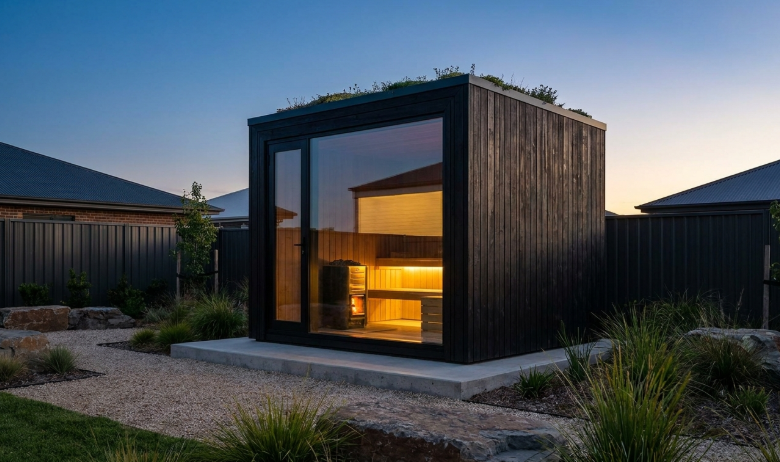
A traditional cabin sauna heats the room to 170 to 200 degrees Fahrenheit using a stove and stones, usually on a 240V circuit, while an infrared cabin warms your body directly at a gentler 120 to 150 degrees using carbon or ceramic panels, often on a standard 120V plug. If you want the highest heat and the option of steam, go traditional. If you want lower installation cost and a milder session, infrared is the easier fit.
Step 1: Decide How Much Electrical Work You’re Willing to Do
This is the single biggest practical difference between the two. A traditional cabin sauna built for two or more people almost always needs a dedicated 240V circuit sized to the heater, commonly 6 to 9 kW, which means an electrician pulling new wire from your panel. Many infrared cabins, by contrast, are designed to run on a standard 120V household outlet, since the carbon or ceramic panels draw far less current than a stone-based heater. If you’re renting, working with an older electrical panel, or just want to avoid a permit and inspection, infrared removes that step almost entirely.
See also: Rosy Kellogg: The Life and Contributions of Rosy Kellogg
Step 2: Decide What Kind of Heat You Actually Want
Traditional cabins heat the air around you, so the room itself climbs to 170 to 200 degrees and you can ladle water on the stones for löyly, the burst of humid steam that’s central to the Finnish sauna tradition. Infrared panels skip heating the air and instead warm your body directly through low-EMF carbon or ceramic elements, so the ambient temperature stays closer to 120 to 150 degrees even though your skin still warms up. Some people find the lower ambient heat of infrared more tolerable for longer sessions, while others feel traditional heat is what actually delivers the sweat and cardiovascular response they’re after.
Step 3: Compare Install Complexity and Materials
A traditional cabin needs kiln-dried spruce, cedar, or hemlock paneling to handle repeated humidity cycles without warping, a stove with proper guard clearances from the nearest bench (check the manufacturer spec, typically 3 to 4 inches minimum), and often a stone bed of 40 to 50 pounds for good heat retention. Infrared cabins use similar wood shells but skip the stone bed and steam considerations entirely, with panels mounted flush against the interior walls. That makes infrared cabins somewhat faster to assemble out of the box, since there’s no stove clearance calculation or ventilation plan for steam to work through.
Step 4: Weigh the Cost Difference
Traditional 2 to 4 person cabin saunas typically run $2,500 to $6,000 before electrical work, with the 240V circuit adding another $500 to $1,500 depending on panel distance. Infrared cabins in a similar size range often land $1,800 to $4,500, and skip the electrician cost if your outlet situation already works. Running costs favor infrared slightly too, since lower wattage panels sipping 120V power for a 30 to 45 minute session generally cost less per use than a 6 to 9 kW stove holding a room at 180 degrees for the same stretch of time. Buyers comparing both styles side by side often find it easiest to look at a retailer that stocks both, and Sweat Decks lists traditional and infrared cabins next to each other with the electrical specs called out, which makes the wiring question easy to check before you buy.
Step 5: Match the Sauna to Your Actual Routine
If you’re chasing the cardiovascular research on regular sauna use, most of that data comes from traditional high-heat, steam-capable saunas used several times a week, so a traditional cabin more closely matches the conditions those studies were built on. If your priority is a lower-friction daily habit with easy setup and gentler heat, infrared removes more barriers to actually using it. Either way, a cabin sauna you use three or four times a week beats one that impresses you on paper but sits cold in the yard because the stove intimidates you or the wiring never got finished.
Step 6: Think About Long-Term Maintenance Too
Traditional cabins need a bit more upkeep over the years: stones should be checked every few months for cracking, the stove element inspected annually, and the wood re-oiled periodically to handle the higher humidity load from steam sessions. Infrared cabins are lower maintenance by comparison, since there’s no stone bed or steam cycle to manage, though the panels themselves have a rated lifespan and eventually need replacement, usually in the ten to fifteen year range for quality units. Neither maintenance schedule is heavy, but it’s worth factoring in if low ongoing effort matters as much to you as upfront cost. Whichever style you land on, buying from a source that documents wattage, voltage, and clearance requirements clearly saves a round of back-and-forth with your electrician before installation day.
What Do First-Time Owners Wish They’d Known?
Owners who switch from infrared to traditional after a year or two often say they underestimated how much they’d enjoy the ritual of ladling water on the stones, something infrared simply doesn’t offer. Owners who go the other direction, from traditional to infrared, usually cite the ease of just walking in and starting a session without waiting on a 240V circuit installation or worrying about stove clearance near a deck railing. Neither regret is universal, which is really the point: both styles deliver a genuine sauna habit, and the version that gets used consistently beats the version that looked better on a spec sheet but sat empty because the setup felt like a hassle.
Frequently Asked Questions
Is an infrared cabin sauna cheaper to run than a traditional one?
Generally yes. Infrared panels draw less power at lower operating temperatures, so a typical 30 to 45 minute session often costs less in electricity than a traditional cabin heated to 170 to 190 degrees with an 6 to 9 kW stove.
Can a traditional cabin sauna run on a standard 120V outlet?
Only very small models. Most traditional electric heaters sized for two or more people need a dedicated 240V circuit, while many infrared cabins are built specifically to plug into a standard 120V household outlet.
Does infrared heat feel different from traditional sauna heat?
Yes. Infrared panels warm the body directly at 120 to 150 degrees Fahrenheit ambient air temperature, while a traditional sauna heats the air itself to 170 to 200 degrees, which produces a more intense, drier heat and the option of löyly steam from water on hot stones.
Which type is better for a first-time sauna buyer?
Infrared cabins tend to suit first-time buyers who want lower installation complexity and a gentler heat, while traditional cabins suit buyers chasing the higher-heat, steam-based experience the cardiovascular research is mostly built around.
Do both cabin styles need the same clearance from walls?
No. Traditional stove-based cabins need several inches of guard clearance around the heater per the manufacturer spec and local code, while infrared panels mount flush to the wall and generally only need standard room ventilation.
References
- Cardiovascular and Other Health Benefits of Sauna Bathing: A Review of the Evidence, Mayo Clinic Proceedings, 2018
- Clinical Effects of Regular Dry Sauna Bathing: A Systematic Review, Evidence-Based Complementary and Alternative Medicine, 2018
- Effects of heat and cold on health, with special reference to Finnish sauna bathing, American Journal of Physiology, 2018
- UL, electrical safety standards for heated enclosures
By Jason Farrow