When your air conditioner shuts off without warning, it can make the whole house feel uncomfortable fast. Before assuming the worst, it helps to check a few basic things that commonly interrupt cooling. In some cases, the problem is smaller than it seems, which is why many homeowners look into LK Heating HVAC emergency repair only after ruling out the simplest causes first.
A sudden AC shutdown does not always mean a major component has failed. Sometimes the issue comes down to a thermostat setting, a tripped breaker, a clogged filter, or a loss of power to the outdoor unit. A quick review of those basics can help you stay calm, avoid making the problem worse, and give clearer information if you do need professional help.
Check the Thermostat First
Start with the thermostat. Make sure it is set to cool and that the temperature is lower than the current room temperature. It is also worth checking that the fan setting is on auto instead of on, since that can sometimes make it seem like the system is working when it is only circulating air.
If the screen is blank, the thermostat may have lost power. Some units use batteries, so replacing them may solve the issue. If the display stays off or the system still does not respond, move on to the next step.
Look at the Breaker Panel
A tripped breaker is another common reason an AC suddenly stops. Check your electrical panel for any breakers that have shifted out of position. Reset it once if needed.
If the breaker trips again right away, leave it alone. That usually points to a larger electrical or mechanical issue. Repeated resets can put more strain on the system and create a bigger problem.
Replace a Dirty Air Filter
A clogged filter can restrict airflow enough to cause cooling problems or even force the system to shut down. Pull the filter out and see whether it is covered in dust and debris. If it is dirty, replace it with the correct size.
This is one of the easiest things to overlook, but it can have a real effect on performance. Poor airflow can make the AC work harder than it should, especially during hot weather.
Look for Ice or Water
If you can safely access the indoor unit or refrigerant line, check for visible ice. Frozen components usually mean the system has been under strain, often because of airflow issues or another fault that needs attention. If you see ice, turn the AC off and let it thaw.
You should also look for pooled water or excess moisture around the unit. That can point to a drainage problem or a frozen coil that is beginning to melt. Either way, it is a sign that the system should not keep running until the issue is addressed.
Check the Outdoor Unit
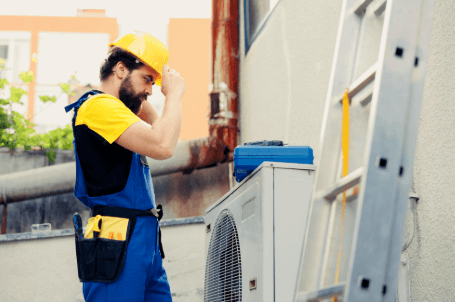
Go outside and inspect the condenser. See whether it is running, humming, or completely silent. Remove any loose debris around it, such as leaves or branches, if you can do so safely. Good airflow around the unit matters.
Do not open the cabinet or try to handle electrical parts. The goal here is simply to observe. If the outdoor unit is not running at all, or if it sounds unusual, that is useful information to pass along during a service call.
See also: Does Verizon Home Internet Have Data Caps: Verizon Home Internet Data Cap Information
Let the System Rest Once
If the AC stopped after running for a long time, especially on a very hot day, shut it off for a short period. After that, turn it back on once to see whether it restarts normally.
This can help you tell the difference between a temporary interruption and a system that truly needs repair. What you do not want to do is keep cycling it on and off over and over. Repeated attempts can add wear and may worsen the original problem.
Think About the Warning Signs
Try to remember what the system was doing before it stopped. Maybe it was blowing
warm air, running longer than usual, making odd noises, or struggling to cool certain rooms. Those details matter because they often point to the cause. Many AC failures feel sudden, but the warning signs usually start earlier. Noticing what changed before the shutdown can make the next step much easier.
Know When It Is Time to Call
Once you have checked the thermostat, breaker, filter, and visible signs around the unit, there is not much benefit in pushing further on your own. If the system will not restart, keeps tripping the breaker, has ice on it, or is not moving air properly, it is time to stop troubleshooting.
That is when calling LK Heating HVAC emergency repair is the right move. At that point, you have already ruled out the most obvious issues and gathered enough information to explain the situation clearly. If the problem turns out to be more serious, fast help may prevent added strain or damage. In situations like that, emergency HVAC repair is often the safest next step.
When your AC suddenly stops working, a calm first check can save time and reduce stress. Looking at the thermostat, breaker, filter, indoor unit, and outdoor condenser can help you catch simple issues before assuming the worst. And if those steps do not bring the system back, you will be in a much better position to call for help and describe exactly what is going on.